
How to get accessibility buy-in at your organisation
Accessibility is often treated as optional, expensive or only relevant to a small group of users. These perceptions lead many organisations to deprioritise it in favour of work that feels more urgent or visible.
In reality, accessibility has a much broader impact than most teams expect and a far more manageable scope than they fear. This page is designed to help leaders and digital teams understand where scepticism comes from, why it matters, and how to make better decisions by replacing assumptions with evidence.
Why accessibility doubt exists
Many leaders and teams hesitate to invest in accessibility due to assumptions that revolve around two core ideas:
The impact feels small.
If accessibility is believed to affect only a small number of users, it is easy to deprioritise it in favour of work that feels more urgent or visible.The scope feels large.
Accessibility is often thought to be associated with full rebuilds, extensive redesigns or long delivery timelines. When the work feels unbounded, it becomes difficult to justify investment or even to know where to start.
Together, these assumptions create a familiar pattern: low perceived impact paired with high perceived effort.
In this context, scepticism about accessibility is understandable. It reflects constrained budgets, competing priorities and uncertainty about return on investment. These misperceptions shape how accessibility is discussed and often lead to it being deprioritised. Addressing the common myths behind the uncertainty shifts the conversation away from assumption to evidence.
Common myths debunked
The myths below all come from the same place. Some underestimate how many people accessibility affects, others overestimate how much work it requires. Addressing them makes it easier to see where decisions are being shaped by assumption rather than reality.
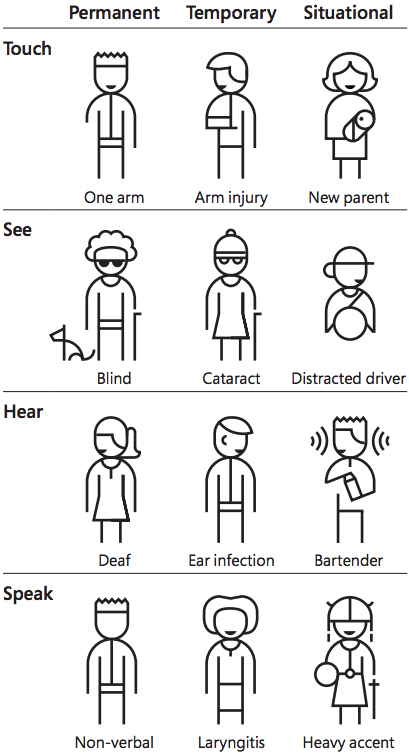
Myth 1: We do not have disabled users
This myth underestimates the impact of accessibility by assuming disabled users are rare or absent.
You almost certainly do. In New Zealand, 1 in 4 people live with a disability. That’s 1.1 million people, or put another way, the entire population of Auckland.
These numbers are conservative. People with temporary impairments like a broken arm, older users, neurodiverse people and those facing situational barriers like using a phone one-handed or working in poor lighting all encounter digital barriers. Accessibility improvements support all of these users, not just those who identify as disabled.
Believing you do not have disabled users means designing for an imagined audience rather than your real users.
Myth 2: Accessibility only benefits a small number of people
This myth underestimates impact by treating accessibility as niche rather than foundational.
Accessibility features improve usability for everyone. Clear structure, readable text, consistent navigation and predictable interactions reduce friction across all user groups. Many common features today, like video captions and voice activation, originally came about to support disabled users and are now enjoyed by many people.
Disabled users are also a loyal and profitable audience. When people can reliably access a service, they are more likely to return, recommend it and trust the organisation behind it. This value does not require new research or market discovery; improving accessibility lets you better serve a significant portion of your existing audience.
Studies show companies with mature accessibility programs achieve 28% higher revenue than their competitors.
Powerful stats like this can be used in leadership briefings to dispel and persuade.
Myth 3: Accessibility is too much work and requires a full rebuild
This myth overestimates scope by assuming accessibility work is unbounded and disruptive.
Accessibility feels overwhelming when its scope is undefined. In practice, accessibility work can be prioritised and staged. Many high-impact improvements are small and targeted, such as:
Including alt text on images
Making form labels clearer
Improving colour contrast
Adding visible focus states to interactive elements
These are representative of the kinds of issues teams commonly uncover when they assess accessibility in real products. Many of these changes can be made within existing systems without major redesign or rebuilds.
When accessibility is integrated into design, development and content practices, it becomes part of normal delivery. Overestimating scope is one of the biggest reasons accessibility is delayed unnecessarily.
Myth 4: Accessibility is too expensive or not worth the return
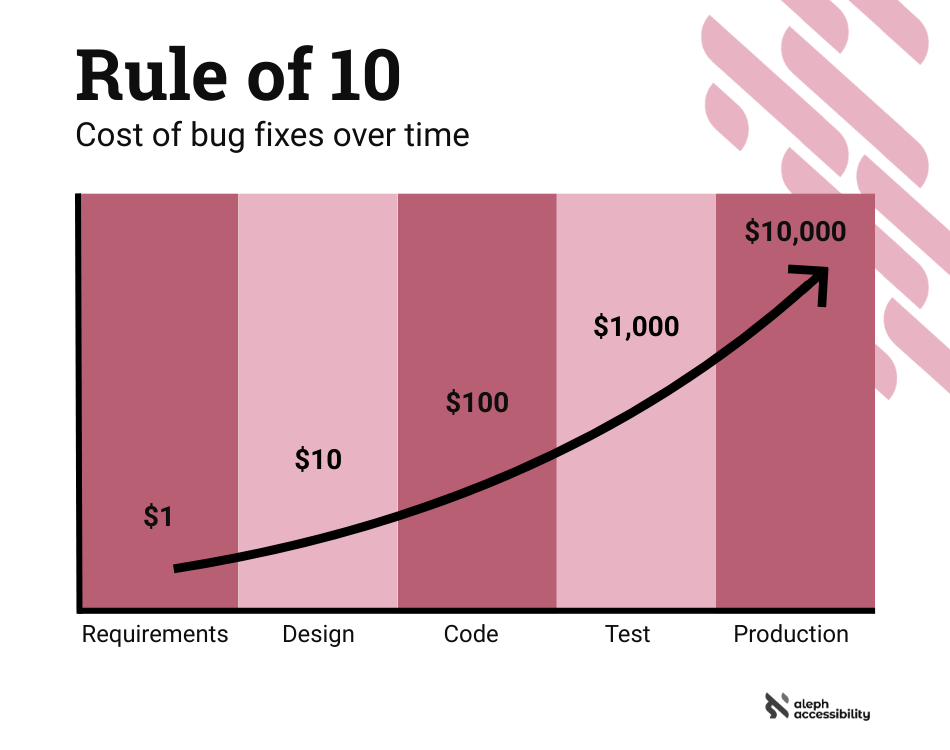
This myth overestimates cost by confusing retrofitting under pressure with planned work.
Accessibility becomes expensive when it is addressed late, reactively or under external pressure. When it is planned and part of standard processes, costs are far lower and more predictable.
The return is not limited to compliance. Accessible services reduce support demand, improve completion rates, increase adoption and avoid rework. This impact is well documented across multiple sectors, including in New Zealand and Australia, where organisations consistently see accessibility improvements translate into measurable business outcomes.
When accessibility is embedded into workflows and measured against meaningful service metrics, it becomes a cost-effective investment rather than a financial risk.
Myth 5: We have other priorities above accessibility
This myth is the outcome of underestimated impact combined with overestimated effort.
When accessibility is perceived as high-cost and low-impact, it will always lose to more visible priorities. Without addressing the earlier myths, accessibility struggles to compete for attention or funding.
The risk of delay is not neutral. Missed users, reduced service quality, complaints and reputational damage all compound over time. For many organisations, legal exposure is also an unanticipated risk. Even teams taht do not consider themselves “international” may still fall under overseas accessibility requirements through their users, platforms or partnerships.
The most effective organisations avoid this trade-off entirely by making accessibility a regular part of work and definitions of done. Instead of competing with other priorities, they treat it as part of building reliable and high-quality digital services.
Making the business case for accessibility
When the true impact and scope of accessibility are understood, its strategic value becomes clear. Embedding accessibility into your workflows allows organisations to:
Align with organisational goals
Accessibility supports inclusion commitments, public sector obligations and procurement requirements. Teams can use accessible design as a concrete way to meet these mandates without adding separate projects.Increase adoption and satisfaction
Services that work for all users deliver a smoother, more dependable experience. Prioritising high-impact accessibility improvements ensures more users can complete tasks successfully and builds trust with your audience.Reduce risk and avoid unnecessary cost
Integrating accessibility early prevents expensive retrofits, avoids complaints and mitigates reputational damage. Planning and prioritisation make accessibility manageable within existing budgets and timelines.Enhance quality and delivery
Accessibility is not a trade-off. It improves design, content clarity and functionality for everyone, helping teams deliver higher-quality products without slowing down delivery.
By recognising accessibility as a strategic asset, teams can make informed, evidence-based decisions that demonstrate value to leadership and create measurable impact across the organisation.
How to address accessibility scepticism in your organisation
Once the true impact and scope of accessibility are understood, action becomes clear. Focus on these tangible actions to remove uncertainty and demonstrate the value of accessibility across your organisation:
Clarify impact: Gather user data, examples and audit findings (if available) to show how many people are affected and where improvements will matter most
Define scope: Break accessibility work into prioritised, achievable tasks rather than leaving it as an undefined programme
Integrate accessibility into workflows: Embed accessibility into design, development and content processes rather than treating it as a separate task
Start with low-hanging fruit: Identify changes that deliver quick, noticeable benefits to build momentum
Educate decision-makers with evidence: Share concise summaries to highlight findings and recommended next steps
Measure and communicate progress: Track improvements and share results to maintain visibility and support.
These steps prepare teams to take meaningful action and give them the tools to secure leadership support for accessibility.
Next steps
When accessibility struggles to gain traction, the most effective next step is often creating shared clarity rather than pushing for agreement.
The Accessibility Impact Brief is a short, practical document designed to help you translate accessibility concerns into organisational language leadership can engage with. It helps you connect user impact to risk, cost and uncertainty using what you already know, without needing to persuade, defend or be an expert. Many teams use it to move the conversation from opinion to evidence and to identify whether an accessibility audit or another action is the right next step.
Aleph Accessibility helps organisations make clearer, more confident accessibility decisions across design, delivery and procurement.
If you want to make accessibility part of the way you work, you can learn more about our audits, consulting and training, or get in touch for a short, no-obligation conversation.